The BrightSign founder built her own UK manufacturing facility to keep her gesture-to-speech glove in production, then opened it to startups with ideas of their own.
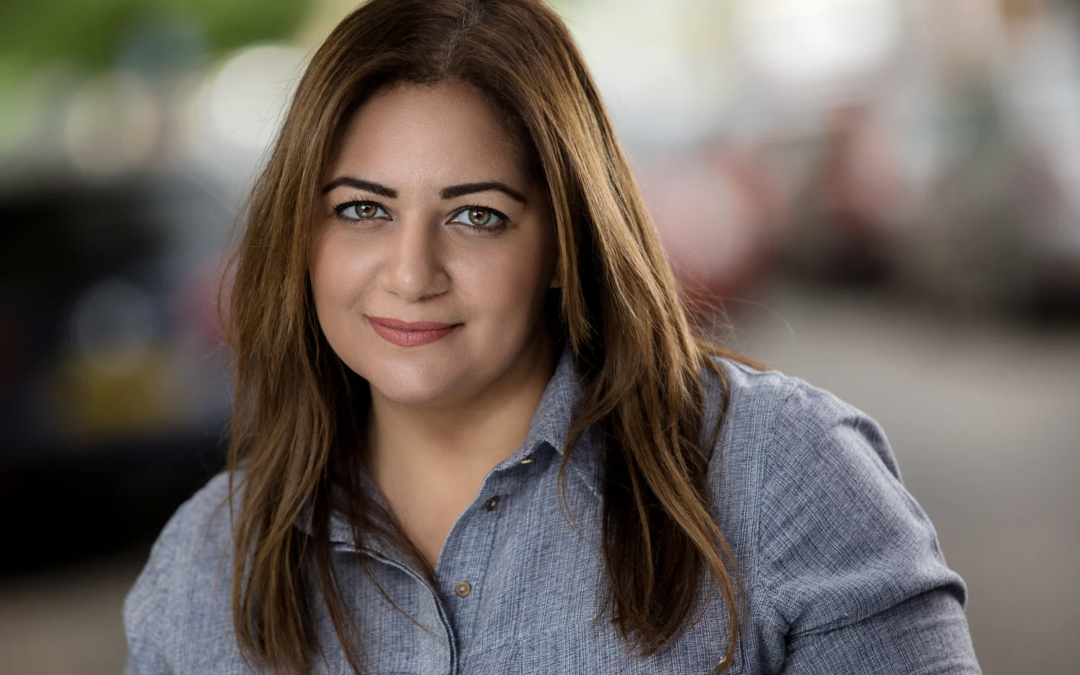
When the company making the gloves at the heart of her business stopped producing them, Dr Hadeel Ayoub had to rethink how her product got made. She is the founder of BrightSign, a smart glove that turns a wearer's hand signs into speech, and chief technology officer of Fidly, the prototyping lab that grew out of that moment. Her story shows how hard, and how rewarding, it can be to build physical products in the UK.
BrightSign began as academic research. Hadeel was exploring how hand movements could control digital environments when she was selected to represent her university at an IBM hackathon in Seoul focused on artificial intelligence for social care. She built a system that recognised gestures and spoke them aloud, won the competition, and came back to emails from parents of nonverbal children asking for the technology. Some councils asked whether they could fund it. She says it took one night to decide to set her other research aside.
The glove is often mistaken for a sign language translator. It is closer to an empty dictionary: embedded sensors record what the hand is doing, and the user tells the system what each gesture means. That makes room for a school's own signs, or for people who cannot fully move their hands. A companion app transcribes signs, can switch output language, and lets users attach recorded audio to gestures. Later, users asked to map signs to control other devices, from lights to a wheelchair.
At first, BrightSign reached users only through collaborations with councils, schools and assistive technology platforms, rather than as a consumer product. When requests arrived from outside education, the team tested an online shop with 100 units. They sold out within the month, with orders from countries including Chile and Brazil.
The harder lesson was commercial. Ayoub describes hardware as a sinkhole for money, especially in assistive technology, where the market is already niche. The company shifted toward software, outsourcing glove production to an established data glove maker and concentrating on machine learning. That work produced a patent for one-shot learning, where the system learns a gesture from a single example rather than thousands.
Three years in, the arrangement ended. The manufacturer, which Hadeel believes had been acquired, stopped making gloves for others. With the technology already proven in schools, the company secured government backing to build its own manufacturing facility in the UK. Bringing production in-house cut the cost of each glove by a factor of four, and the price fell to a quarter of what it had been.
Pricing is a line Hadeel has held throughout. She wanted the glove to be free to the people using it, a stance that broke up her first business partnership. The model that emerged places the glove within disability benefits, school provision and workplace reasonable adjustments, alongside FCA-approved interest-free financing at 20 pounds a month over two years. She says no user has paid for a glove from their own pocket.
The new lab raised an obvious question: what else could it do? The answer was Fidly, which builds early prototypes for hardware startups with an idea but no route to a working unit. In close to two years it has reached 40 projects, including an LED football training mat, arena-mapping technology for horse trainers and a run of kickboxing projects. Only three of the 40 are in London. Hadeel is CTO, with her longtime BrightSign business partner as CEO, and she has deliberately kept her name off Fidly's website and LinkedIn.
That separation is a reaction to BrightSign, where she says she and the brand became inseparable, to the point that event invitations were withdrawn when she offered to send a team member in her place. With 15 people now working on Fidly projects, she recently took her first holiday in three years.
Fidly can currently produce kits in the hundreds, but it does not yet have the capacity for the thousands that mark mass production. The team has moved into its own freestanding building on a 10-year lease, with a loading bay and separate floors for the lab and offices, bringing more control along with more to manage.
Hadeel admits she does not know exactly where it all leads. Fidly is building tools for its own roadmap, including a pick and place machine and plug-in prototyping modules meant to help startups prototype faster and more cheaply. Every week brings a new idea, she says, and she is comfortable not having it all figured out.