
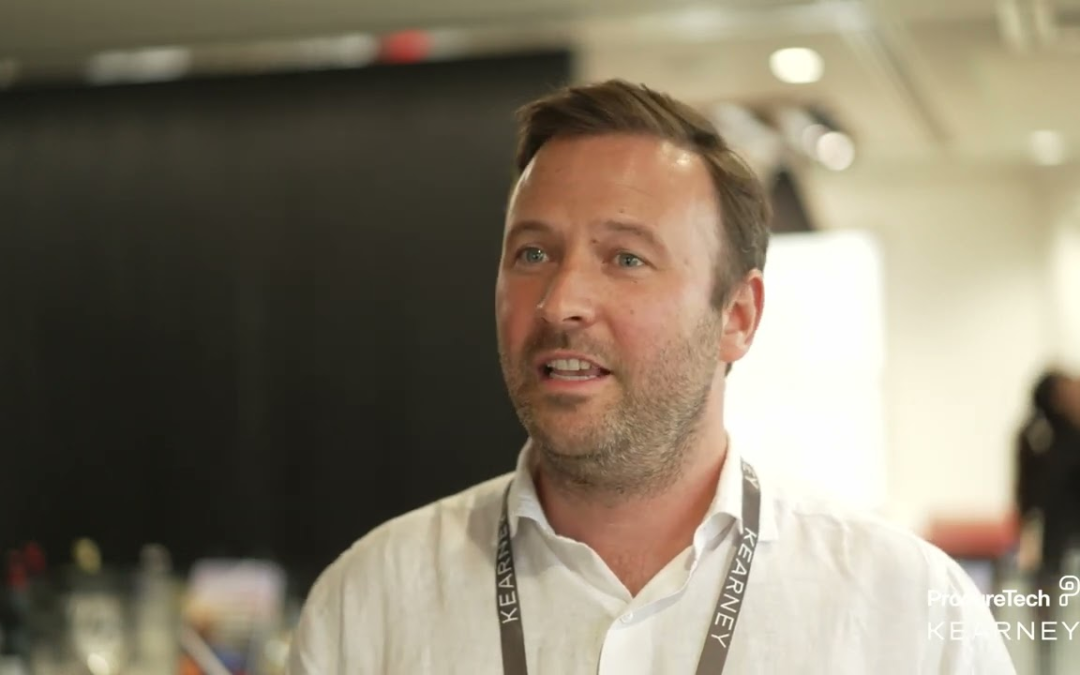
The SpendKey co-founder spent two decades on the buying side of corporate deals. Now he is betting software can do in days what advisory teams took months to deliver.
Alex Grundy spent around 20 years on the buying side of large corporate deals, at one point helping Barclays put together a five-year private medical insurance agreement worth roughly £250 million. Today he is co-founder and CEO of SpendKey, an AI-powered procurement intelligence platform that aims to compress months of advisory work into days. Five years in, the company is working towards its most ambitious step yet: moving from telling clients where to save money to delivering those savings itself.
Grundy began his procurement career at IBM before moving to Barclays. Within four or five years he had gone independent as a contractor, with Credit Suisse among his first roles, and later set up his own consultancy, which grew to himself plus a team of 12 associates. He was using spend analytics in that work and was underwhelmed by the outputs. His response was to build a product that would help him deliver his own services more efficiently. That product became SpendKey, now a venture-backed software company with a team of more than 30 across the UK, US and India. He and his co-founder staked their life savings on it.
Asked recently by an investor what drove him, Grundy walked away feeling he had given a poor answer. On reflection, he traced it to a "fear of wasted potential," rooted in high standards and ambition. He had always wanted to start a business, something he suggests may partly come from a family of self-made entrepreneurs.
SpendKey produces spend analytics down to sourceable category level within 10 days, followed by an AI-supported opportunity assessment setting out what a company should do, why, and how it could do it itself. In high-spend categories, the platform goes into contracts, invoices and bills of material. The full output is delivered within 15 days and, according to Grundy, requires three half-hour calls with the client. He compares it to a team of 12 spending three months on the same exercise, describing it as three years' worth of work done in a day by agentic workflows.
He positions the approach against traditional consultancy, which he argues is conflicted because it is paid for time. SpendKey's recommendations are written in enough detail for clients to act on themselves, particularly quick wins and working capital improvements in the first 90 days. Each is tested against what the company calls a procurement nuance framework, covering hundreds of considerations. One example he gives: if a board member also sits on a supplier's board, recommending a switch away from that supplier is unlikely to land.
The next phase raises harder questions. Grundy describes SpendKey today as a hybrid, delivering recommendations that lead to an outcome. The five-year vision is "outcomes as a service," where the platform negotiates with suppliers, finds second sources and removes human input from the workflow entirely. He wants onboarding reduced from 15 days to hours, noting that much of the current time goes on fixing data.
Building that means competing for AI talent against employers who pay far more. Grundy cites forward deployed engineers in San Francisco earning $800,000 a year, a figure SpendKey cannot match. The company instead hires for mindset, trains people up, and relies on growth and options to keep them. He is equally direct about the other side of hiring, suggesting a founder may have to let go of roughly two thirds of the people they hire, and should do it quickly rather than a year later.
His own working life has shifted too. When SpendKey started he had no children; he now has two, and says that forced him to delegate and become ruthless with his time. The move from buyer to seller was its own adjustment. "You think you know sales because you're a buyer, but you've got no idea," he says.
Grundy expects enterprise procurement teams to look markedly different within five years, possibly half their current size, with people focused on relationships and on governing the AI doing the work. He is candid that SpendKey has been no overnight success, and believes the real rewards for a founder can come in years six to ten. At five years old, the company is now approaching that stretch.