
The joint managing director of a 57-year-old mechanical services contractor on sharing the top job, keeping staff for decades, and building in an unsettled economy .
Andy Cox did not set out to work in construction. At 18 he wanted to be a graphic designer, but he missed the grades for university. More than four decades later, he is joint managing director of Mellor Bromley, a Leicester mechanical services contractor founded in March 1969. It is a role he chose to share rather than fight for.
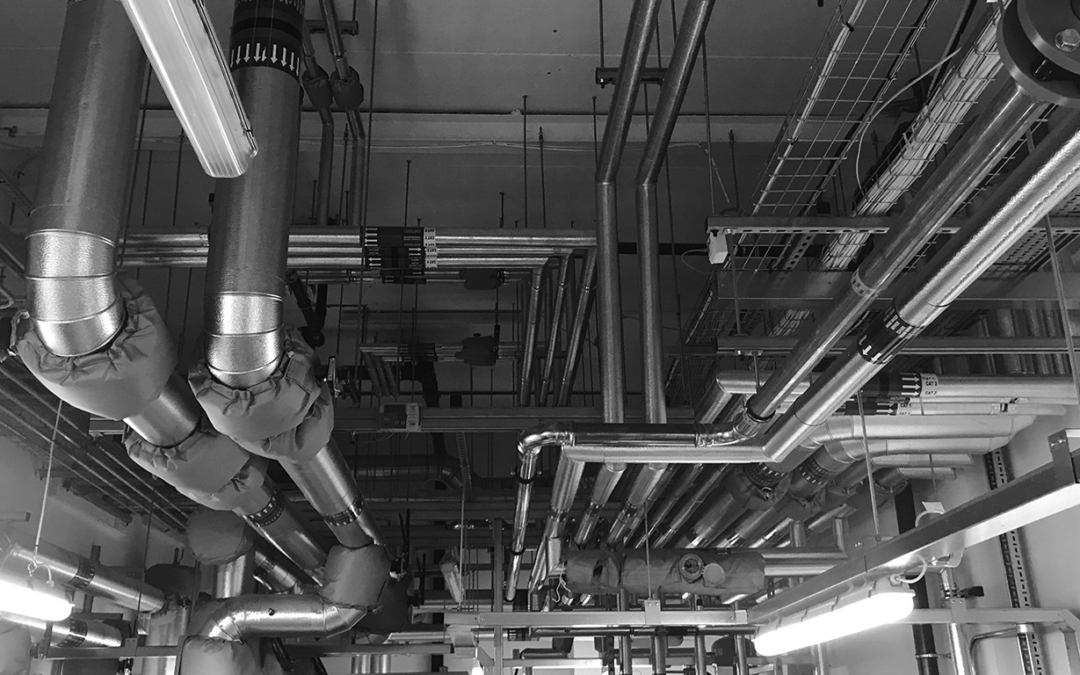
Mellor Bromley works in a part of construction that is often misunderstood. Most people know what an electrical subcontractor does. Mechanical services, as Cox puts it, is all the other stuff: heating, ventilation, air conditioning, sanitation, and the testing of the moving parts. The company works only on commercial projects, including hospitals, schools, universities and commercial buildings. Its clients include Kier Construction, Bowmer + Kirkland, Clegg Construction and Galliford Try.
The business is family owned. The founder died young, and his children are now the shareholders, holding the business through a parent company. They largely leave the directors to run it. Cox has no shares. He is candid that the business is highly competitive and that someone will always do the job cheaper. Mellor Bromley does not undercut rivals to win contracts. It wins a lot of repeat business, which Cox puts down to quality and value for money. Turnover was roughly £18 million last year. Cox says the company runs at around a 20 percent markup, which he believes is higher than most in the trade. "I don't really care about turnover, I care about profit really," he says.
Cox's route to the top was not a straight line. His girlfriend's father worked in construction and suggested mechanical services. Cox started in 1985 with a four-year apprenticeship at Mellor Bromley and stayed for eleven and a half years. He then spent ten months at a much larger engineering firm and disliked it, saying he felt he had become a number. He came out as gay at 27. He recalls that construction was not an easy environment then, and that at the new company he felt he could not be honest about himself. He left the industry and spent seven years in a partnership running a high street fashion shop in central Leicester. When he asked his old boss for a reference, he was asked to come back. He did not want to return as a project manager, so he retrained as a quantity surveyor and rejoined the company in 2004.
The joint leadership came out of an unusual situation. The shareholders were not entirely happy with the managing director at the time and brought in a management consultant. The outgoing MD backed Ashley Whitehead as his successor. The consultant favoured Cox. The two men had been friends for about 20 years, and they felt they were being set against each other.
At an awards function, they talked it through and decided to take the role together. Whitehead is comfortable speaking in front of a room and leads on winning the work: sales, estimating and tenders. Cox focuses on delivering it, including the difficult conversations with clients over contract clauses when things go wrong. He admits the split has never been followed strictly. Major decisions, such as senior hires, are made jointly.
Cox thinks the arrangement has changed the company. Their previous MD would insist he was right even when ten people disagreed with him. With two leaders, neither can do that, so problems get discussed. Cox believes this shows staff that leadership is about negotiation rather than control.
That approach extends to how the company treats its people. Most staff are homegrown and started their careers with the company. Cox estimates that at least ten have stayed their whole working lives. Whitehead has completed 30 years of continuous service, and a few others have passed 25. Staff complete at least six professional development courses a year, and some complete up to twelve. Beyond government-funded apprenticeships, the company spends about £15,000 a year on courses it cannot get funding for. Management training is offered, not imposed. Cox believes people who have some control over their own destiny are happier.
Asked what keeps him awake at night, Cox first names staff problems. Sometimes the company gives what it thinks is a good pay rise, only for someone to say they are unhappy with it. On reflection, though, he says the biggest worries are things he cannot control. Projects are being delayed or cancelled as clients lose confidence. Imports from Europe have been harder since Brexit. Goods from the United States face tariffs. Rising oil prices push up the cost of plastic components. On fixed contracts, the company cannot pass those increases back to clients. Cox says the period since 2020 has felt very different from the many years of stable inflation and interest rates that came before.
Looking ahead, Cox wants steady, sustained growth rather than growth bought on price. He sees reaching around £40 million in turnover within a decade as achievable, though he notes that inflation will affect what that figure really means. His view on what drives it all is simple. Mellor Bromley has no product to sell, only a service delivered by its people. "Look after your staff," he says.
Connect with Andy on Linkedin.