
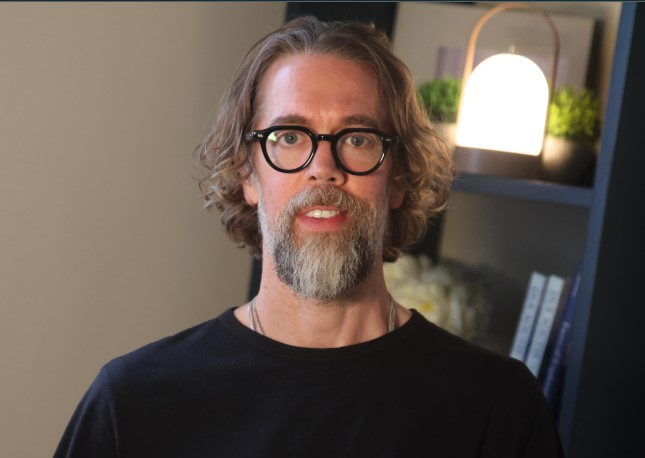
After a career building attention for Adidas and TikTok, Bulteel is now trying to give people their time back with Ting, an AI scheduling tool backed by Google.
Daniel Bulteel spent close to seventeen years helping some of the world's biggest brands win attention on social media, first in agency life, then inside Adidas and ByteDance, the parent company of TikTok. Now he is applying that experience to a much smaller, more mundane problem: the daily grind of rescheduling meetings.
Bulteel is the co-founder of Ting, an AI calendar tool built to sit inside email threads and handle the back and forth of finding a time that works. The idea came from a familiar irritation. After a run one morning, he opened his inbox to four emails, all about rescheduling the same set of meetings across time zones. He spent half an hour replanning his day and started to think about how much collective time gets lost to that kind of admin, multiplied across individuals, teams and companies. The concept he settled on was simple: copy an AI assistant into the email thread and let it use knowledge of a person's calendar and preferences to sort out the logistics.
Ting is currently six to seven weeks into a closed beta with more than 100 active users and is preparing to move toward an open beta. The company is backed by Google, secured after research into which technology partners and programs suited the business and a deliberate effort to make the case for the team and its trajectory. The core team, including Bulteel's co-founder and CTO, who he matched with through Y Combinator's founder-matching platform, is based in the UK and Europe.
The business challenge Bulteel keeps returning to is a familiar one for early-stage founders: how to move fast enough to learn from real usage without breaking the trust of the people testing the product. He describes it as an ongoing conversation with his CTO, balanced against a clear north star, that people who try Ting should come away thinking it simply works.
Getting there means catching technical edge cases while also training the system to understand the fluid, assumption-heavy way people actually talk about time and meetings, where a phrase like "I'm landing" carries context about time zones that a person understands instinctively but a machine has to learn.
The other adjustment has been personal. Moving from a specialist executive role, where his value came from deep expertise in one area, to running a company has meant redirecting his attention toward hiring, product direction and investor relations rather than the tasks that made him stand out earlier in his career. He has leaned on a routine of early morning runs and a deliberately wide mix of podcasts, including ones outside his usual interests in technology and culture, as a way to stay mentally clear and keep perspective while making near constant tradeoffs.
For now, Ting's early adopters are less enterprise buyers and more independent professionals and a group Bulteel calls productivity seekers, people drawn to how technology can streamline their working and personal lives. Bulteel is tracking growth through total meetings booked, with an eye toward a longer-term signal: how many of those meetings happen entirely between two Ting users, where the scheduling friction disappears without either person touching an inbox.
Whether that model scales beyond its early prosumer base will depend on how well the product holds up as more people, and more of the messy nuance of real scheduling, move through it during the open beta.