
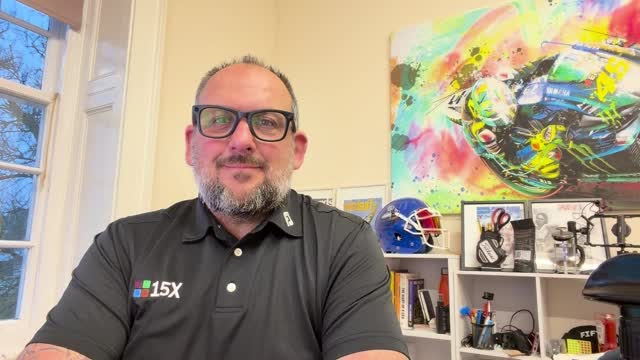
The former professional athlete and fighter turned recruitment entrepreneur is betting that operational discipline, not speed, will carry his AI-enabled talent platform from ten people to two hundred and fifty.
Antony Baker spent the first half of his career winning things quickly. A world windsurfing title at nine years old, a professional fighting career across Australasia, the US and the UK, and a run of national and international titles all came before he turned to business. Building 15 Group, the multi-industry recruitment, consultancy and AI platform he founded, has taken longer, cost more, and demanded a different kind of patience than anything that came before it.
15 Group works across sectors including financial services, construction, marketing, professional services, legal services, logistics, technology and education, with two industries, construction and financial services, currently live. The model pre-qualifies and vets talent before they reach a client, testing candidates on time management, attention to detail, communication and motivation before they are placed on what Baker calls the platform's industry-specific "hubs." Alongside the talent and consultancy business, the company is building a suite of industry-specific AI tools, with roughly 60 currently in use and a target of more than 100.
Getting there has not been cheap. Baker has put over £700,000 of his and his wife's money into the business, against revenue of around £400,000 last year, a fraction of what the company is spending as it builds out. About 18 months ago, he turned down two million dollars in funding, a decision he made against the wishes of others in the business, because he judged the company was not ready to take it. He went roughly two years without paying himself, and some staff left during that period because the business could not yet match what they could earn elsewhere. The core team now numbers around ten, supported by roughly 40 day-rate contractors, a number Baker expects to grow toward 150 within months once contracts already in motion are signed.
The real test ahead is not funding or headcount, but structure. Baker describes the middle office, the operational layer that sits between winning business and delivering it, as the part of 15 Group that has to hold as the company scales from ten people to a target of 250. That work is led by his operations director, a former Barclays and JPMorgan executive, working alongside a finance director and a head of advisory with a Goldman Sachs background. Baker credits his operations director with building frameworks he says are stronger than anything he would design himself, and describes their working relationship as one of constant friction that he considers necessary rather than a problem to be solved.
Much of Baker's own reflection has centred on how his instincts, honed for split-second decisions in competitive sport, translate to running a growing company. He has spoken about being diagnosed with ADHD at 48, and how understanding that changed how he manages his own pace, particularly the habit of moving to conclusions faster than the people around him can follow. His summary of the company's operating philosophy, that the human judgement behind the business has to come before the artificial intelligence built on top of it, doubles as a description of how he now approaches delegation: build trust in people first, then build the tools.
What happens next depends largely on whether that middle layer holds under real pressure. Baker has said plainly that the next set of problems will only surface once contracts are signed and volume increases, and that operations, not sales, is what he is watching most closely heading into the company's next phase.