
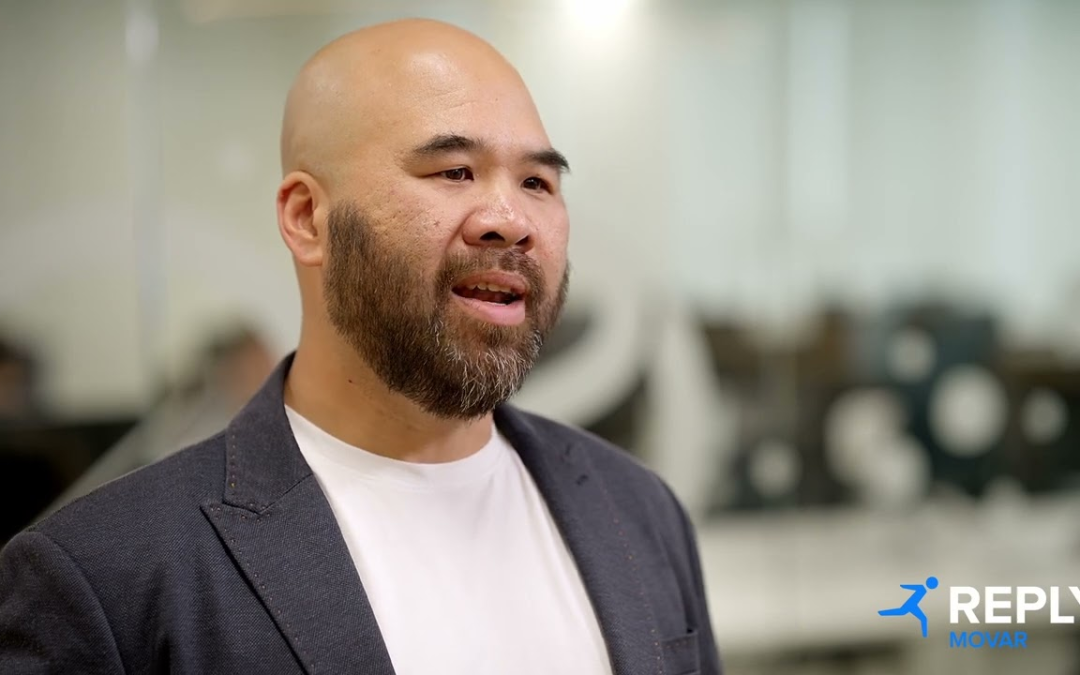
The MoVar co-founder built his career on the unglamorous discipline of project controls, then bet the business on the idea that most companies drown in data but starve for clarity.
Dale Foong did not set out to build a technology consultancy. He moved from South Africa to the UK in 2007, unsure whether he would stay two weeks or two years, and ended up staying almost two decades. He fell into project controls early on, while working at a defence company, then moved into rail and infrastructure, eventually working across organisations including Transport for London, Rolls-Royce and major water utilities over the course of his career.
That grounding eventually led to MoVar, a construction and infrastructure consultancy Foong now runs alongside his co-founder, Oli. The original business was founded in 2013, and Foong joined around four years ago, helping steer it into a rebrand focused on data analytics and, more recently, artificial intelligence. In 2024, MoVar won the Global Innovation Award at the Project Controls Expo, in partnership with Severn Trent Water, for a digital PMO implementation. Earlier this year, before being acquired, the company placed 14th in a national UK Top 100 SME awards programme and was ranked the top construction consultancy in the country. A few months ago, MoVar was acquired by Reply, a large international technology group with partnerships across major cloud and AI providers.
The turning point Foong keeps returning to is less about growth and more about capacity. Scaling a consultancy, he explains, means carrying the cost of new hires for months before they generate revenue, since consultants are typically billed out only once fully onboarded, and clients often pay on 30, 45 or 60 day terms. Multiply that gap across a growing team and cash flow becomes the defining constraint on how fast a business can expand. Foong is candid that this is rarely discussed openly, calling it one of the hidden stresses of running a services business, one that founders tend to absorb quietly while keeping the team motivated.
The deeper thread running through Foong's reflections is about data itself, and the gap between collecting it and actually using it. He argues that data alone has no value; what creates an advantage is the information asymmetry that comes from knowing what to do with it. He is similarly skeptical of the confidence people place in dashboards, noting that a polished interface can create the appearance of clarity without the substance of it, and that the same scrutiny people apply to a new colleague should apply to AI-generated output as well.
That skepticism extends to how MoVar positions itself against competitors offering off the shelf, one size fits all solutions. Foong's view is that every organisation's problems are different enough that a templated fix tends to create new problems rather than solve the original one. He points to the best consultants he has worked with, as a client himself, as those who lead with questions rather than answers, digging into root causes before proposing a fix.
Not every constraint has been resolved. Foong points to the way commercial contracts are structured across construction supply chains as a persistent friction point, one he believes could eventually be addressed through technology such as blockchain-based payment mechanisms, though it remains untested in his own work. He is more confident about where the next twelve months could take the business: closing the gap between what MoVar's technology can already do and how much of it clients have actually adopted, in an industry he describes as consistently slow to embrace new tools.
Looking further out, Foong points to robotics and quantum computing as the two areas he would like MoVar to be operating in within three years, framing robotics as a way to reduce safety risk on construction sites rather than replace jobs outright.
For now, the business is still integrating with its new parent company, a process Foong describes as early days but well received on both sides. He credits MoVar's culture, built around five stated values (integrity, drive, empathy, adaptability and loyalty) as much as its technology for making the business an attractive acquisition target in the first place.