
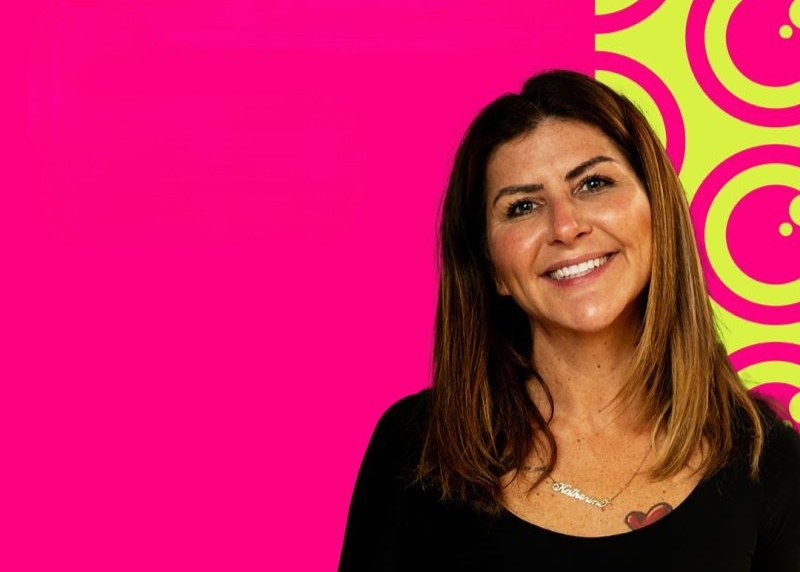
The Art of the Possible founder grew her agency by reinvesting in people, and now faces the harder task of charging what the work is worth.
When Kat Patterson went to register her new agency nearly seven years ago, she did not yet have a name for it. She settled on Art of the Possible, borrowed from Bismarck, and set out with a logo and a laptop. The agency has since reached 1.5 million in turnover with no outside funding and no debt, and Patterson is now working out how to double it.
Her route into marketing was not planned. Patterson studied international history and politics at the University of Leeds and says her school offered no information about careers in marketing. Early in university she was recruited as a Red Bull promoter, a role she took more seriously than expected, getting up at four in the morning to hand out cans to bin collectors. After graduating she joined an agency now under the Ogilvy umbrella as an account executive. Roles followed across agency and client side, including work on Camelot, which ran the National Lottery, and at Musgrave, a franchise business where she effectively answered to 2,000 retailers. She later spent five or six years at McCann before moving to Ogilvy One and then a small content agency.
What she took from those years was a client-side understanding of what keeps marketers up at night, and the process of the big global networks. What she wanted to leave behind was bureaucracy. Art of the Possible was built to combine that rigour with the speed of a small team, serving a mix of global brands and startups.
The agency's direction was shaped almost by accident. A former client contact at Lamb Weston, one of the world's largest suppliers of frozen potato products, introduced Patterson to the company's country manager. Over coffee in Bank, the manager said her agency roster had a gap in social media and asked whether Patterson covered it. Patterson said yes. At the time, she did not have a Facebook account. She spent the following six months immersing herself in the discipline. When lockdown arrived and brand budgets shifted to digital, the agency was positioned to grow. Lamb Weston remains what Patterson calls a pillar client.
Growth came without borrowing. Patterson says she took out only what she needed to live and put the rest into people. She acknowledges the agency could probably have grown faster with debt and says she would be open to it in future. The agency now works cross-category, with particular strength in social and food and beverage. Business partner Tim Hedges, who drew the original logo and later joined formally, leads the creative side.
Patterson describes the step from 1.5 million to the next milestone of three million as really difficult. Some clients came on board when the agency had no overheads, and their fees reflect that. Asking long-standing clients to pay more as costs rise is, she says, a challenging conversation. "I don't charge clients enough," she admits, adding that her team regularly reminds her the agency is not a charity.
There are structural questions too. Patterson is still technically the only client service person in the business, and she would like to build a larger strategic team. A sister operation in New Zealand, run by Adam Brammy, uses a project-based model drawing on a roster of around 100 contracted specialists. Patterson has discussed replicating it closer to home but sees a mismatch: her global clients need always-on social support, which does not suit work billed by the project or the hour.
Machine learning tools have eased some pressure. Patterson says they have not removed any roles, but for the first time since founding the business, staff are reporting spare capacity. The agency has also invested in a new business team. "We are ready," she says.
Patterson describes herself as someone who would always be fine whatever happened, borrowing a phrase from her father, who has now reinvented himself again as an author: still pedalling. With a new business team in place and capacity freed up, the next stretch for Art of the Possible will test whether it can win new work at the right price while holding on to the clients that built it.