
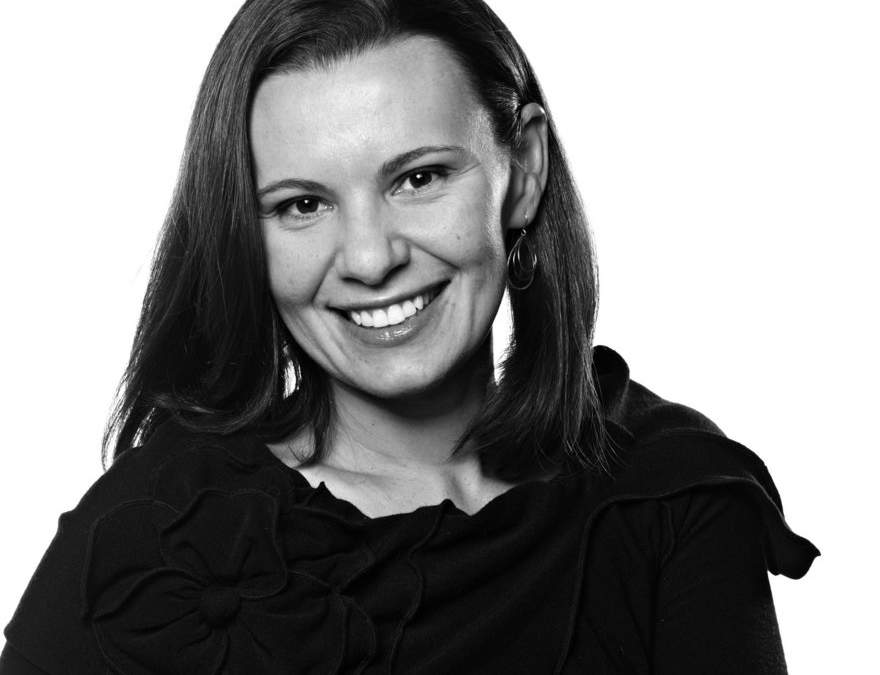
The Wayfound co-founder and CEO is betting that businesses deploying digital workers will need digital managers to supervise them.
As companies move from experimenting with large language models to deploying autonomous AI agents, a practical question is surfacing: who checks the agents' work? Tatyana Mamut, co-founder and CEO of Wayfound, has built her company around that question. Her answer draws on a career that has run from global advertising through cultural anthropology to product leadership at some of the largest names in technology.
Mamut came to the United States from Eastern Ukraine as a child, settling first in New York before moving to California. Like many immigrant children, she picked up English faster than her parents, and from the age of eight or nine she handled conversations with officials and doctors on the family's behalf, an early lesson in taking responsibility. She also credits an Eastern European ethos she sums up as "nice is not kind": the view that telling the truth, even when it is uncomfortable, serves people better than smoothing issues over.
Her career began on the new business team at Leo Burnett. During a global creative review, she objected to a Special K ad she found offensive and to the way the executives in the room were discussing it. A few weeks later she was given a $50,000 budget and a team of four women to pitch an alternative to Kellogg's. The resulting "Reshape Your Attitude" campaign was sold and went on to win awards. A PhD in cultural anthropology from UC Berkeley followed, then IDEO in 2007, where she led large digital projects as the iPhone reshaped what clients wanted. Roles at Salesforce, AWS and Nextdoor came next. At AWS, she helped take a no-code app builder from a pitch in Andy Jassy's office to a team of 150. At Nextdoor, her team built the Kindness Reminder, which prompted users before they posted potentially toxic content; a third edited their post and a third chose not to post at all.
The lesson she draws from all of it is consistent. "The big problems in technology are not technology problems," she says. "The big problems in technology are human problems." Wayfound grew out of a year and a half she spent without a job after ChatGPT launched in November 2022, researching how the technology worked and where its problems would emerge.
She concluded that systems resembling human brains would need supervision, an idea she connects to Marvin Minsky's The Emotion Machine, which closes by arguing that neural networks will need external critics. The large enterprises she spoke to had no plans to build that capability themselves.
The platform centres on an AI agent manager, a category Gartner refers to as a guardian agent. Businesses connect agents from platforms including Agentforce, OpenAI, Anthropic and Intercom, then give the manager each agent's role, goals and guidelines. It reviews agent activity in real time, sends alerts when an agent goes off course, grades outputs to speed up human review, and pauses multi-agent workflows so a faulty step can be redone. In a customer service case study the company is preparing to publish, Mamut says guideline violations fell from 5.9 percent to under 1 percent and knowledge gaps dropped from 8.5 percent to under 6 percent. Her argument is that even the best agents carry error rates of 1 to 3 percent, and that a second agent checking the first is how enterprises reach the reliability they expect from software.
The harder question is durability. Mamut believes the SaaS-era approach of finding a workflow friction and building a product around it now has limits, because software is easy to copy and large AI labs may absorb today's problems. Wayfound holds a patent, but she is candid that others are trying to build what it has built, and that some will get there. Her focus is instead on assets she believes customers will not want to give up: a partner ecosystem, including a partnership with Salesforce's Agentforce, and trust. The company's tagline is "trust in intelligence," and it secured SOC 2 Type 2 compliance before taking on its first customer.
Mamut, whose team works from hubs in San Francisco and Raleigh, North Carolina, describes the longer goal as helping companies move toward what she calls a multi-sapiens workplace, where people and AI agents work alongside one another. Within three years, she expects Wayfound to be the critical layer for that interaction. As she sees it, the need is inevitable; the only open question is when enterprises are ready for it.