
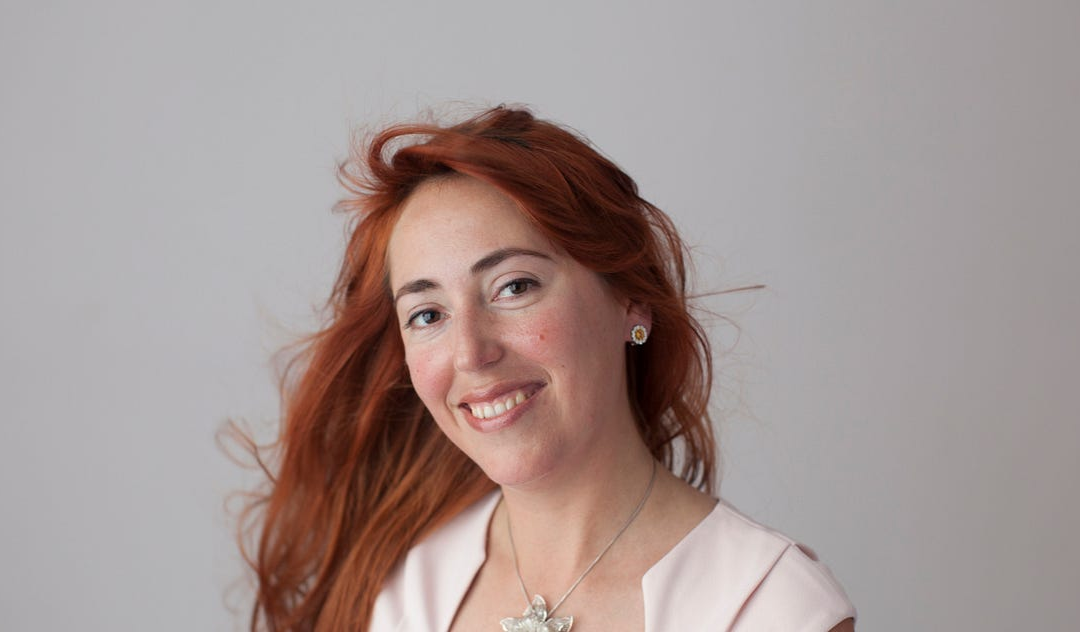
After building a platform that compresses months of cosmetics regulatory work into seconds, Lena Skliarova Mordinova has stepped back from her technical leadership role to focus on why AI is narrowing the path into early careers.
Lena Skliarova Mordinova has been writing code since long before Python was the default language of the field and years before generative AI entered everyday vocabulary. Her early work was in image recognition for the Ukrainian Space Research Institute, analyzing satellite imagery to detect patterns in canopy, spot potential biohazards, and flag areas at risk of wildfire, a use case she notes some startups are only now building products around.
From there, her path led somewhere less expected: cosmetics technology. As technical co-founder of Good Face Project, she helped build an AI platform used by manufacturers, brands, and retailers of personal care products, described in introducing her as serving companies including L'Oreal and Estée Lauder. The system maps the structure, toxicity, and function of more than 160 million molecules, letting chemists check a formula against more than 120 regulations and generate compliant versions in what she describes as seconds rather than months. The scale of the problem it solves is not small. A single ingredient like vitamin C can appear under roughly 200 different names across regulatory documents, and matching formulas to shifting compliance rules has traditionally required specialist consultants and long timelines. The platform also handles reverse engineering, letting a company work backward from a target formula to the raw materials and concentrations needed to produce something similar.
The company's path there was not direct. Good Face Project began as a business-to-consumer idea, charging customers to recommend products, before pivoting toward manufacturers and brands. Its first paying customer was Target, secured through a startup accelerator with the original consumer concept still in place. Skliarova Mordinova describes that willingness to abandon an early idea as a necessary trait for founders generally, arguing that most starting concepts turn out to be wrong in some way and that the ability to adapt matters more than the initial plan.
Underneath the product, she points to a technical choice that sets the platform apart from most AI tools built on large language models: it runs on what she calls world models, a different mathematical approach to representing objects and their properties, which she argues can move predictions closer to certainty rather than relying on the probabilistic guesswork that produces hallucinations in LLMs.
Having spent years as CTO, she has now stepped back from that role. Her attention has shifted to a broader concern: she describes entry-level opportunities for young people as shrinking as AI reshapes hiring, though she stopped short of a precise claim, noting the number of available positions is simply smaller than it used to be. She views the trend as global rather than specific to the United States. Her response is a new venture aimed at helping people who have never used AI learn to apply it, with the goal of helping them move into entrepreneurship faster. A book is also in progress.
Details of the new venture remain limited for now, but Skliarova Mordinova has already shown a pattern of rebuilding an idea once the first version proves wrong. What she takes into this next phase is largely the same instinct that carried Good Face Project from a consumer recommendation tool to infrastructure used by some of the largest names in beauty.