
Tom Truitt spent nearly two decades becoming the go-to recruiter for the live music business. Now he's weighing how much further to grow it.
Tom Truitt has spent 35 years placing executives in jobs, but for the last stretch of his career he has worked almost exclusively in one corner of one industry: live music. He runs the music practice at Turnkey ZRG, the music and sports search arm of a global talent advisory firm, and his client roster includes Live Nation, AEG, Golden Voice and Danny Wimmer Presents, spanning venues, ticketing, talent buying, artist management and touring.

That specialty did not exist when he went looking for it. Truitt spent his first 13 years in headhunting working technology and management consulting clients, placing executives at firms like McKinsey, Bain and Booz Allen during the first internet boom. By the early 2000s, between the September 11 attacks and the dot-com collapse, he had grown disillusioned with the work. In 2007, with no experience in the music business beyond being a fan, he started taking meetings with executives up and down Nashville's Music Row and asking a single question: who is the go-to headhunter for the music industry? The answer, repeated back to him again and again, was that no such person existed. He decided to become that person.
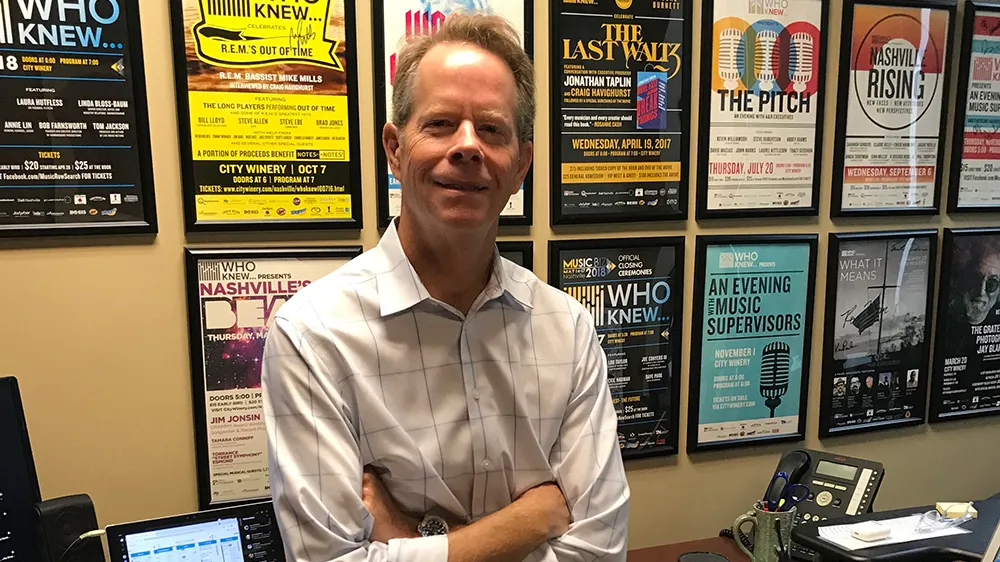
Since then he has been acquihired three times, landing at Turnkey ZRG after a feature in Variety led to inbound interest from several search firms. The unit he now runs handles music and sports, employs about 20 people across both practices, and sits inside a parent company with roughly 500 employees across four continents. Alongside the search work, Truitt has spent a decade building a public platform around the industry. He launched Who Knew, a live TED-talk-style event series, in 2015, drawing crowds that grew from 180 to more than 300 people over 38 events before the pandemic forced a pivot. He rebuilt it as an online webinar called The Smartest People in the Room, which he has now run for roughly 260 episodes, expanding his audience well beyond anyone who could physically get into a room in Nashville or New York.
That skepticism extends to how MoVar positions itself against competitors offering off the shelf, one size fits all solutions. Foong's view is that every organisation's problems are different enough that a templated fix tends to create new problems rather than solve the original one. He points to the best consultants he has worked with, as a client himself, as those who lead with questions rather than answers, digging into root causes before proposing a fix.
Not every constraint has been resolved. Foong points to the way commercial contracts are structured across construction supply chains as a persistent friction point, one he believes could eventually be addressed through technology such as blockchain-based payment mechanisms, though it remains untested in his own work. He is more confident about where the next twelve months could take the business: closing the gap between what MoVar's technology can already do and how much of it clients have actually adopted, in an industry he describes as consistently slow to embrace new tools.
Looking further out, Foong points to robotics and quantum computing as the two areas he would like MoVar to be operating in within three years, framing robotics as a way to reduce safety risk on construction sites rather than replace jobs outright.
For now, the business is still integrating with its new parent company, a process Foong describes as early days but well received on both sides. He credits MoVar's culture, built around five stated values (integrity, drive, empathy, adaptability and loyalty) as much as its technology for making the business an attractive acquisition target in the first place.