
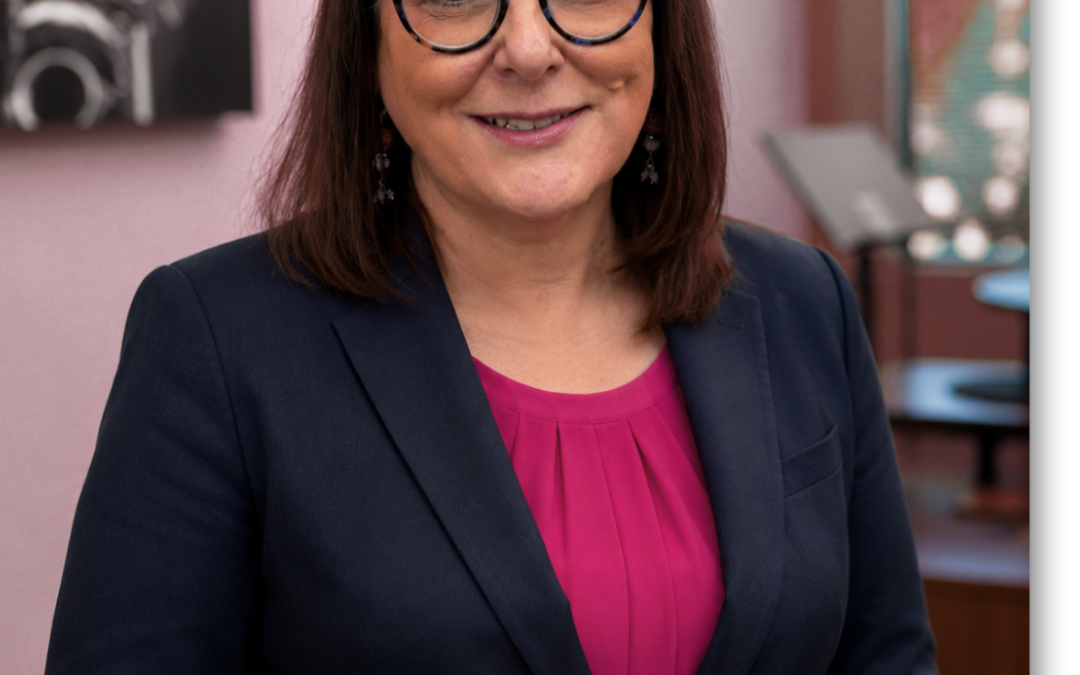
Lisa Canning cut her company from $10 million to $3 million and reduced thousands of products down to five. Now she believes only one kind of investor can finish the turnaround, and she isn't willing to chase them.
Most founders talk about scaling up. Lisa Canning talks about the year she chose to scale down, on purpose, while her industry was shrinking around her anyway.
Canning runs two connected businesses: a music retail and education company she has owned for decades, and SalesMaven, a marketing business she built after concluding the music company could not afford outside marketing help and would have to develop that capability itself. The music company sells instruments and equipment and has more recently built out vocational training for musicians, a virtual program that has trained more than 400 students. SalesMaven eventually became an offer in its own right, working with other small businesses, mostly companies earning at least a million dollars a year, under an accelerator model designed to teach clients how to run their own marketing rather than manage it for them indefinitely.
At its peak, the combined business generated roughly ten million dollars a year. Canning walked that back to around three million. The business, once carrying thousands of products across its lines, was cut down to five. The decision was deliberate. Watching margins compress and cash flow tighten even as revenue and customer demand grew, Canning concluded that scale was pulling the business toward the same fate that had taken down larger, better-funded competitors in her sector. She restructured around a narrower set of products that people already trust and are motivated to sell, and the company has since been recognized by Inc and by the U.S. Chamber of Commerce as a top small business.
The harder problem is the one she has not solved. Canning believes her industry, long strained by thin margins and slow to adapt, needs an outside catalyst to change direction, and she has concluded that the catalyst has to combine money with visibility and influence rather than capital alone. She has never taken outside investment. Everything has been bootstrapped. In conversation, she is candid that she has little appetite for the work of courting investors full time, and even less interest in the idea of pitching for the sake of it. Her preference is to keep building a business credible enough that the right partner recognizes its value without a formal chase.
That ambivalence sits alongside a business that already runs without her for weeks at a time, a structure she has built around documented systems, a resource library, and a team she has deliberately given wide latitude to make decisions. She describes herself as quick to hand off control, a trait she has been told to watch and has instead come to see as an asset. The tension is less about capability than about whether she is willing to spend her own time chasing a specific kind of partner, one who may or may not exist, in an industry she is convinced the rest of the market has written off too early.
For now, Canning is continuing to build out the training side of the business and treating the search for the right partner as an open, unforced process rather than a campaign. She has shown, at a small scale, that a narrower retail and education model can hold its ground and win outside recognition inside a shrinking market. Whether that is enough to draw in the kind of partner she is looking for remains the open question she is still working through.