
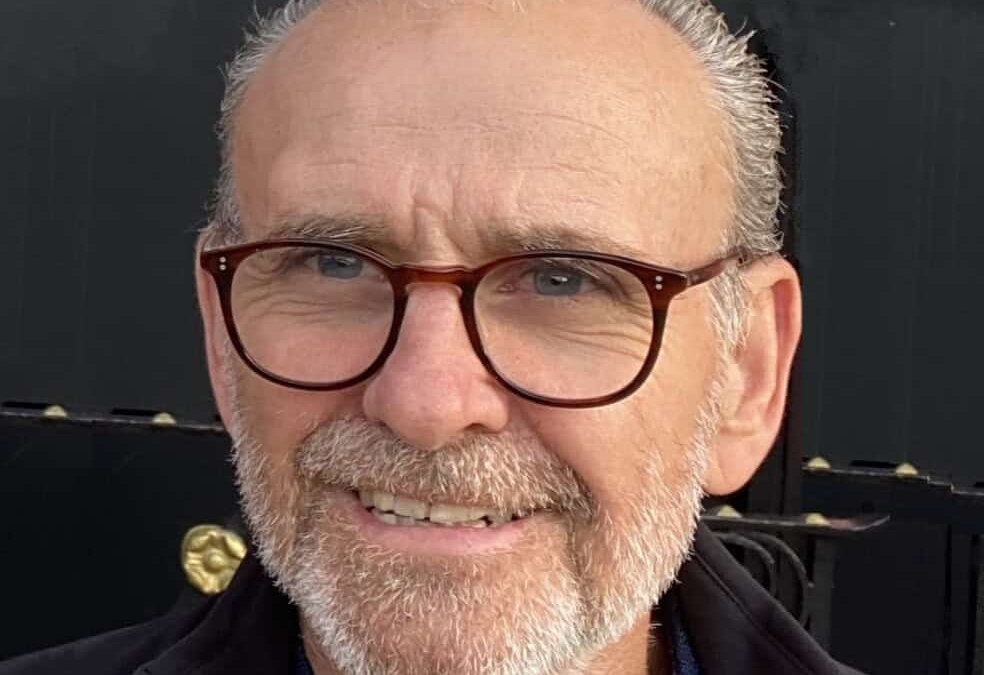
Rob Watt built Innisfree Therapy into a seven-figure practice treating high-profile clients for compulsive sexual behaviour, then chose to grow it slowly rather than trade clinical autonomy for capital
Rob Watt runs a psychotherapy practice out of Harley Street that treats a category of client most of the mental health world avoids: senior executives, board members and public figures whose private behaviour has started to threaten everything they have built. His business, Innisfree Therapy, has spent twelve years developing a model for this specific demographic. Now, with international treatment centres asking to work with him, he is deciding how fast he is willing to let it grow.
Innisfree employs around 17 people, rising toward 20, across a small full-time leadership team and a wider group of self-employed clinical associates. The practice has occupied the same Harley Street premises for eleven years and turns over between one and three million pounds a year, with gross profit around £700,000. At any given time it is running roughly 100 clients through the practice, with about 50 intensive treatment programmes active concurrently. Watt's own path into the work came by way of addiction recovery. After an earlier career in print, design and the music industry, he trained in addiction counselling in his mid-forties, ran a residential treatment programme at a hospital in Roehampton, and eventually founded Innisfree because he believed the models used at the time for treating compulsive sexual behaviour, then still called sex addiction, did not work. What his team has since built integrates three clinical lenses, addiction, trauma and psychosexual therapy, in a combination he says no other provider offers.
The business now sits at a decision point. At the end of last year, Watt turned down external funding that would have let Innisfree scale quickly, choosing instead to grow the company internally. It is a slower path, and he describes it plainly as nerve-wracking. The reasoning is clinical as much as financial: taking on investors or debt, he believes, would cost the practice the flexibility that let it develop an unconventional treatment model in the first place. "I'm protecting the very heart and why we do what we do," he said of the decision. He is also candid about the personal stake in it. At 65, he says he needed to know he had, in his words, legs for this.
Part of what makes the growth question pressing is how much the business still runs through him personally. Every client currently comes in through his own phone, and he carries the financial responsibility for the practice individually, something he has openly described as isolating. He has stepped back from delivering therapy himself and is handing more of the clinical and case management work to his directors, a team he credits directly for the business position today. A new group-led programme now in development is designed to let other clinicians handle assessments that used to require him, easing the bottleneck without diluting the model.
Demand is arriving faster than the internal build-out. A large nonprofit treatment provider in the US, which operates facilities in Florida and Philadelphia, recently invited Innisfree's team to Florida to train its staff and deliver Innisfree's programme into its residential setting there. Watt has also been invited to a facility in Chiang Mai, Thailand. He is wary of the scale some of these organisations operate at. "I'm the poor cousin here," he told one of them, before agreeing to explore a collaboration on his own terms. New programmes addressing chemsex, adolescent and young persons' compulsive pornography use, and women's compulsive sexual behaviour are also in the pipeline for this year, built to be delivered with a smaller footprint than the practice's original intensive model.
Watt has a five-year plan that would double the business from its current turnover, though he treats it as a floor rather than a target. What he is holding onto more tightly than any growth number is control over the clinical model itself, and a team he is still learning to fully hand it to.