A decade after walking away from a salaried role, the former CRM specialist is helping non-technical teams get real value from AI while deciding what his own business should become.
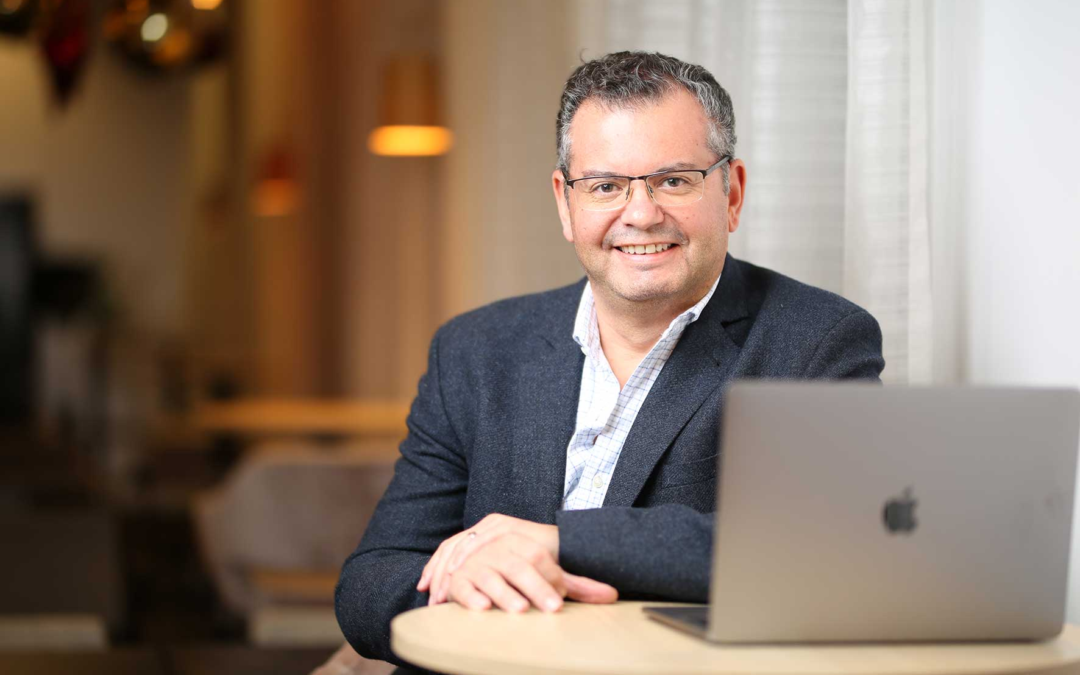
AI training consultant Nick Crawford started out as a sceptic. In 2017, while he was heading up eCRM at Travelodge, his team brought in a platform that used AI to write email subject lines. He was certain no machine could beat him or his team.
He was proved wrong. The tool delivered a 33% uplift in engagement conversion, and in the two years he used it, the human-written test line beat it only once.
That scepticism became fascination, and eventually a business. Crawford now runs Twist as an independent AI training consultant. He works with non-technical business owners and teams who have started using AI but find it harder, and less consistent, than it should be.
Twist began ten years ago. Crawford had been headhunted into an agency role combining account management and CRM. The job was supposed to involve a trip to Bath every couple of months.
In practice, he was there three nights every week. After six months, his children were starting to ask who he was. He left, and having long considered consultancy, chose to "step off the cliff and see if the parachute opens."
For around eight years, the work was email and CRM, much of it early on as a long-running interim. Then, after COVID, budgets were pulled and work moved in-house. The business started to suffer.
Crawford is part of the Marketing Meetup and hosts an in-person event in Milton Keynes every other month. Through that network, he reached out to the founder of AI for Non-Techies when she was speaking at an event.
She was building a train-the-trainer course and taking on associates. He joined, spent six months absorbing new knowledge, and combined it with his marketing and tutoring experience. He calls the result Twist 2.0.
The rebuild was not immediate. The year before last, revenue was down 70%. He has just completed the first full financial year back at around six figures.
His clients have ranged from solicitors and pharmaceutical firms to four-person agencies and Samsung's learning and development team. His starting point is rarely the tool. He asks clients to "remove the technology for a second" and work out what they are actually trying to do.
Alongside training, he works with leadership teams to shortlist first pilots by impact and ease of implementation. At one agency, he is midway through implementing an AI solution that captures incoming briefs, which can arrive incomplete, and produces a version for each department.
Crawford holds a degree in psychology and sees AI adoption as a change problem as much as a technical one. A common frustration he meets is businesses paying for ChatGPT or Copilot licences and seeing little difference.
In his view, people have no motivation to engage until someone explains the ease of use or the impact of the change.
Keeping current is the first challenge. For an AI training consultant, staying credible in front of a room means keeping pace with fast-moving platforms. Three or four full delivery days a week leave little time to learn, handle admin, or build the business.
He recently spent a couple of days adding new training topics to his website, covering safe use of AI, specialist AI for marketing, and the difference between agents and agentic AI. Part of the aim is to appear when someone asks ChatGPT for a UK trainer and consultant on AI.
The second challenge is income structure. "If I don't work, there is no revenue," he says. Revenue has recovered enough that he has started investing rather than protecting income, taking on a LinkedIn agency and an executive assistant.
On growth, he is candid. His projection for the end of 2027 is another year at around six figures. That is the minimum to be comfortable. With "the wheels came off once" still in mind, he wants to prove they can stay on two years running.
He has no clear long-term vision. He wonders whether that is an oversight, or a reflection of how hard it is to predict the AI landscape two or three years out.
Rather than hiring trainers, he would like to become "the grey hair in the corner of a room," partnering with other consultants for larger work. Inbound interest from companies such as Samsung and Vodafone has also made him question who his target client really is.
The fits that come most naturally are marketing agencies, where he speaks the language, and later adopters such as manufacturers of farm buildings.
At 56, Crawford expects to keep working as an AI training consultant into his 60s. After two years of rebuilding, the question in front of him is no longer whether the parachute will hold, but where he wants it to land.
Connect with Nick Crawford on LinkedIn.