
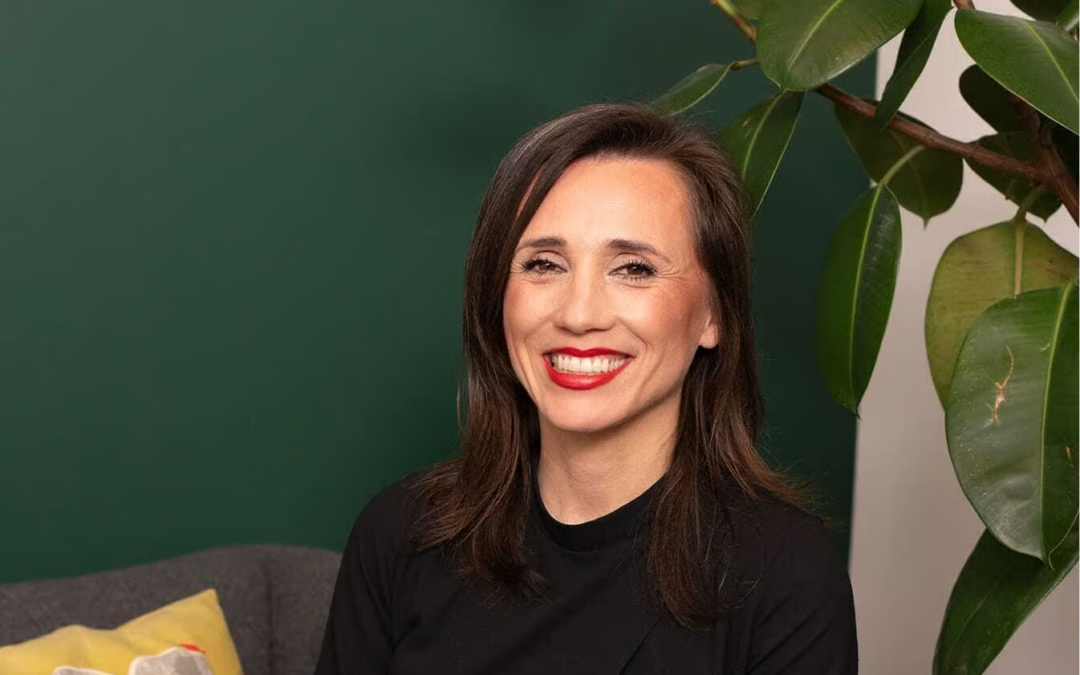
The Future Platforms CEO has built a career translating between marketers and engineers, and is now turning her attention to the study of intuition.
Livia Bernardini has spent much of her career standing between two groups that often struggle to understand each other: the people who build brands and the people who build technology. As CEO of Future Platforms, a digital product development agency whose clients have included BT and McKinsey, she has made that in-between position the centre of her work. Now she is adding a new strand to it.
Future Platforms works across four areas. The first is strategy, from the customer value proposition through to a midterm product vision and roadmap. The second and third are design, covering both technical architecture and front-end interfaces, and the build itself. The fourth combines go-to-market work with ongoing maintenance, either by strengthening a client's internal team or by working on demand as workloads rise. Bernardini says around 80 per cent of the offer can be mixed and matched, though the firm will steer clients away from combinations it believes would compromise quality. Go-to-market is the one service it will not sell on its own, because the agency uses it to de-risk a product's first release.
For delivery, the company relies on a nearshore partner of more than 2,000 people that it has worked with for over 15 years. Staff from that partner join Future Platforms' monthly company meetings. Offshore teams are used more rarely, for relatively standard builds. The firm once white-labelled work for Accenture. Bernardini ended that arrangement, saying she preferred to keep "my fame and my margins for myself."
Born in Italy, Bernardini has lived in Paris, Australia, Japan and Hong Kong, and has spent the last 15 to 20 years running primarily global businesses. She argues that leaders who listen closely to different cultures are better placed to anticipate change and harder to blindside.
Her professional niche sits between brand and technology. In tech environments, she says, product capability is often strong while brand purpose and a clear North Star lag behind. In brand work, the missing piece tends to be the link to data and to experiences that actually convert.
She admits her habit of pointing out both has at times annoyed teams, partners and clients alike. Even so, she sees being the glue between teams that speak different languages as among the best jobs in her profession.
She points to a past project on the EE brand relaunch in the UK as an example. BT's technical team was strong, she says, but the brand vision had not been translated into what the digital product should do and how it should behave. Closing that gap meant aligning teams with different priorities, including persuading the leader she reported to at the time to bring in the right digital thinkers. The resulting interfaces won awards, including recognition in loyalty for a connectivity app. She notes that connectivity is not an easy category in which to build loyalty.
That experience shapes how she thinks about early-stage products. Whether the goal is a minimum viable product or a minimum lovable one, the value proposition has to work for customers and for the business. In her view, the difference between the two comes down to the craft and diversity of the team behind it. She says she has never seen an outstanding product built by people who all share the same skill set, expertise or neurodiversity. On corporate innovation, she is wary of both extremes: a fail-fast reflex she believes better planning could often prevent, and analysis paralysis.
Her newest interest is intuition. After reading The Big Leap on holiday in Kenya in August, she began exploring a PhD, and she has also been a guest lecturer on intuition at an international university in London. Her chairman has given her the go-ahead to pursue it. She sees structured intuition training as a way for organisations to take risks in a more controlled way, reduce bias and even train AI better, arguing that machines are strong at probability but less so at imagination.
The exact focus of the research is still taking shape, sitting somewhere between intuition and experience design or branding. For now, it runs alongside a job she says she loves, and a conviction that better decisions draw on more than data alone.